
Your agents fail on
meaning,
not on models.
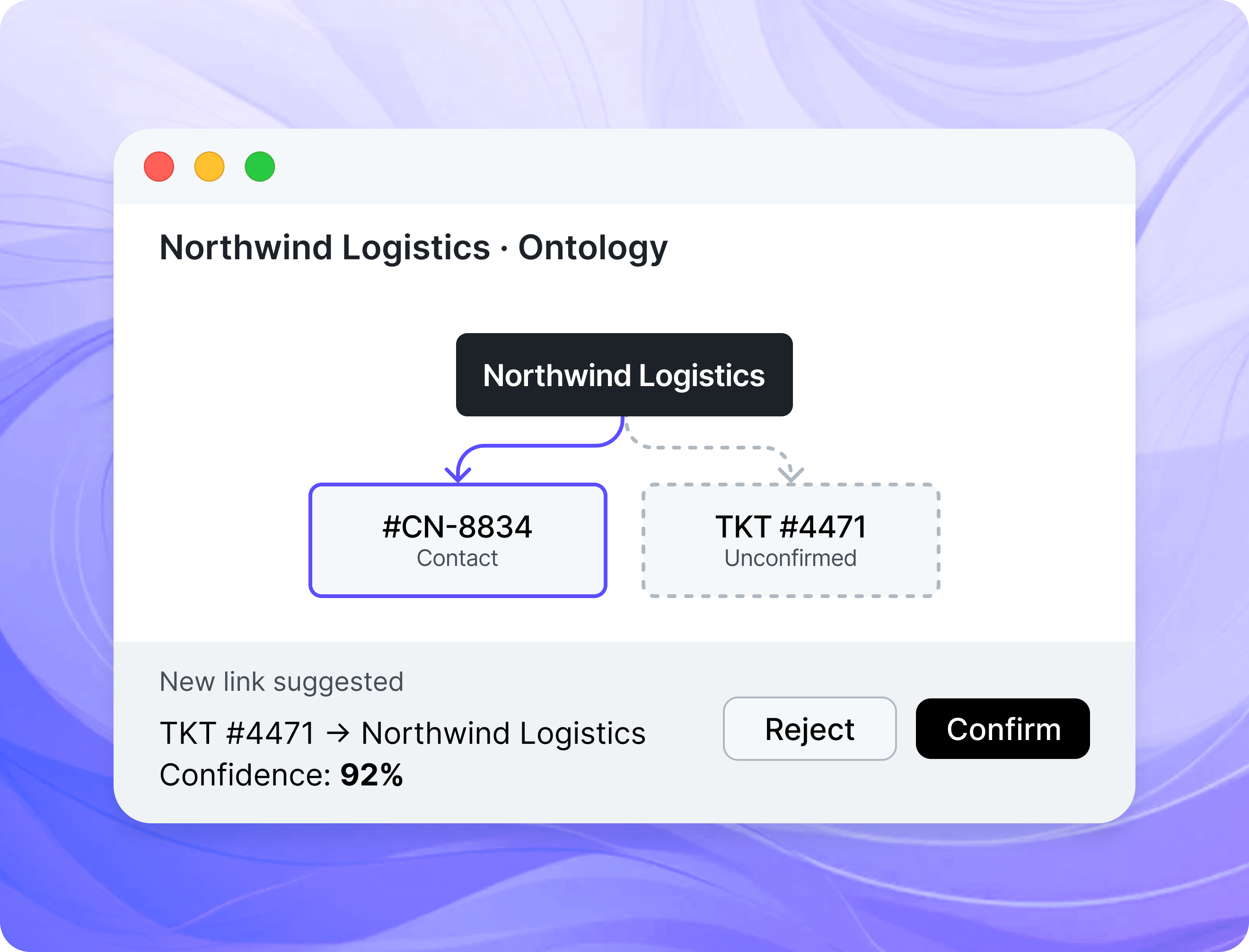
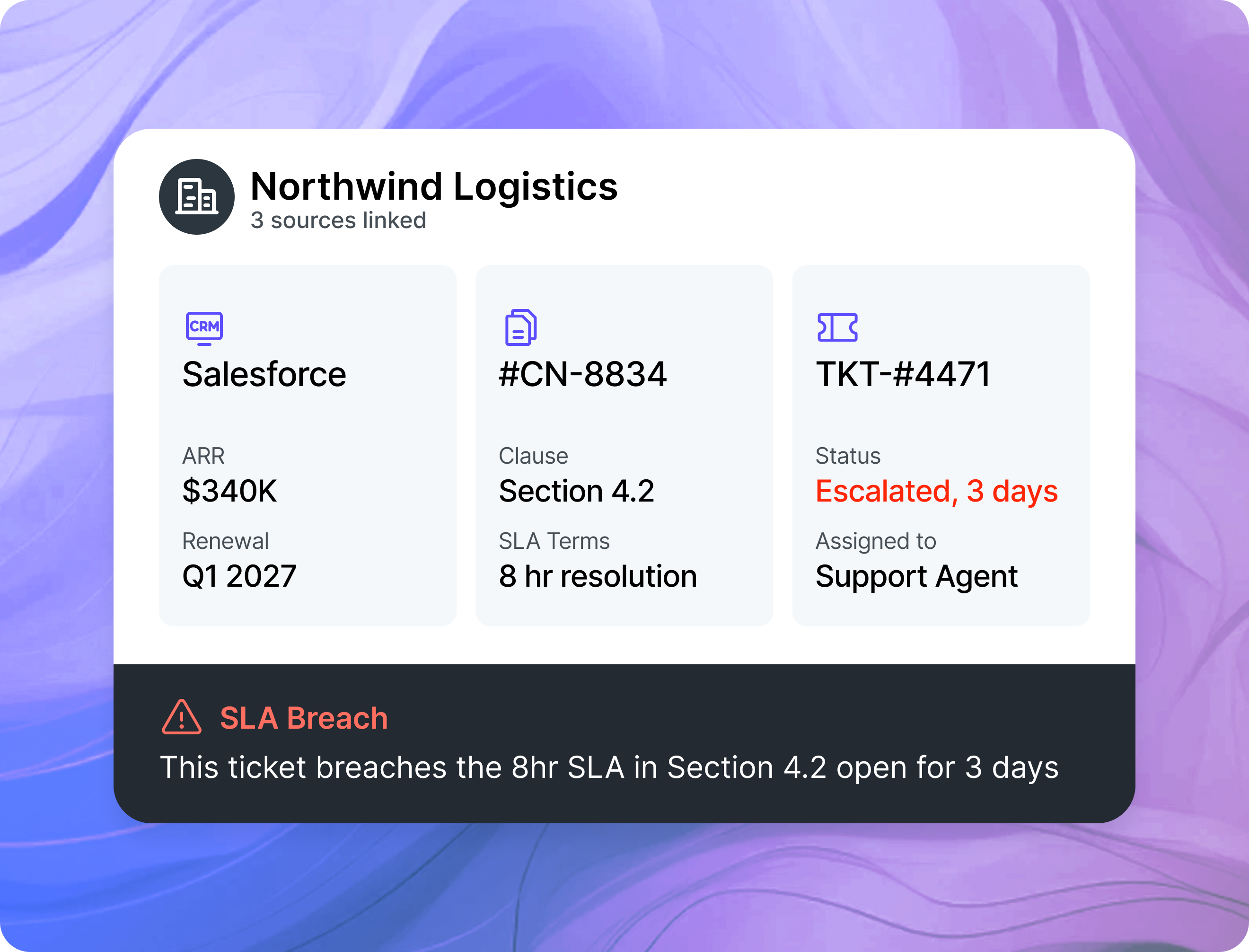
Enterprise agent programs stall because agents don’t understand what a customer is, where the authoritative record lives, or which data they can use.
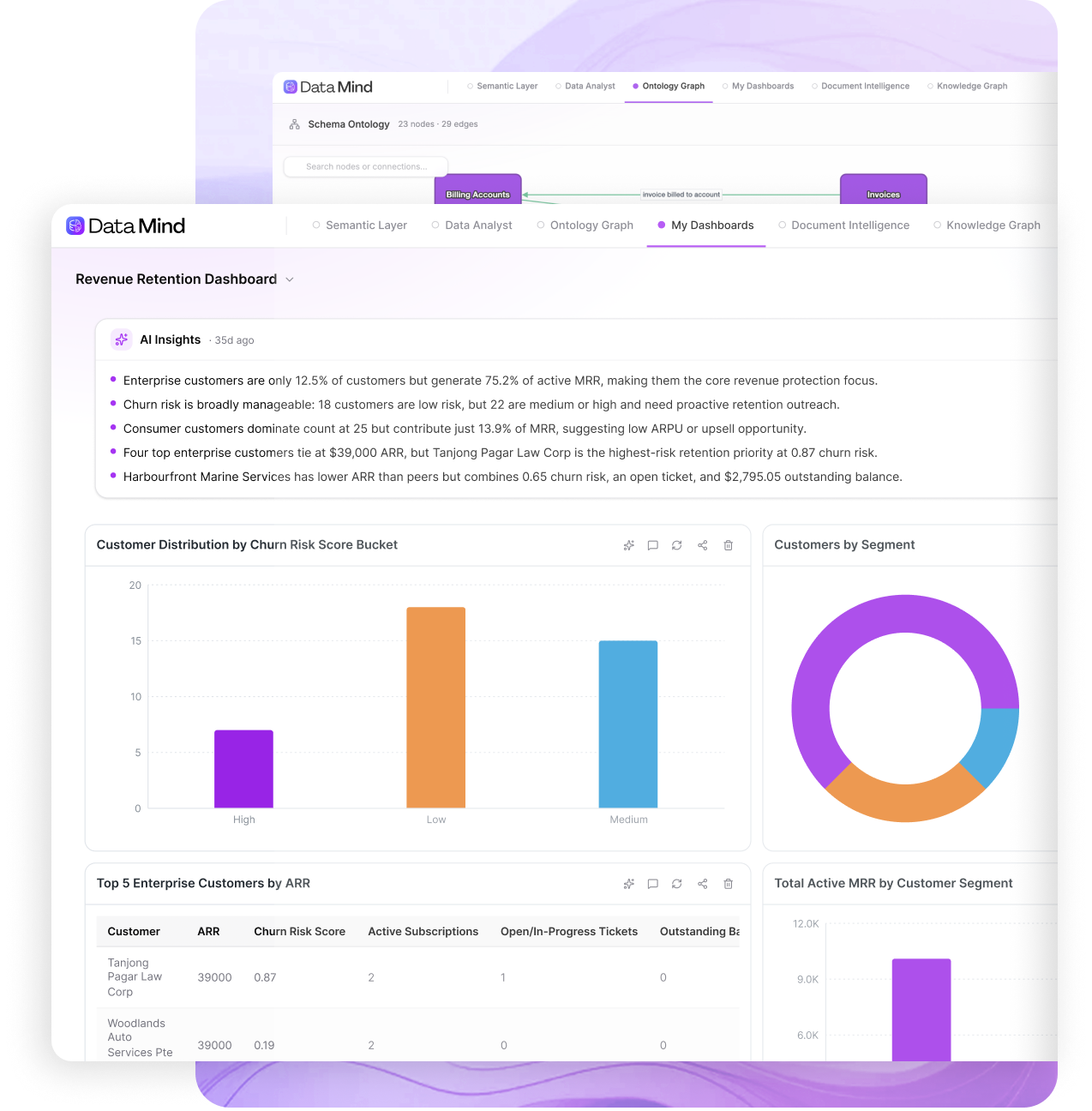
DataMind is the agentic context layer that empowers governed agents to produce accurate answers based on the data scattered across your organization.
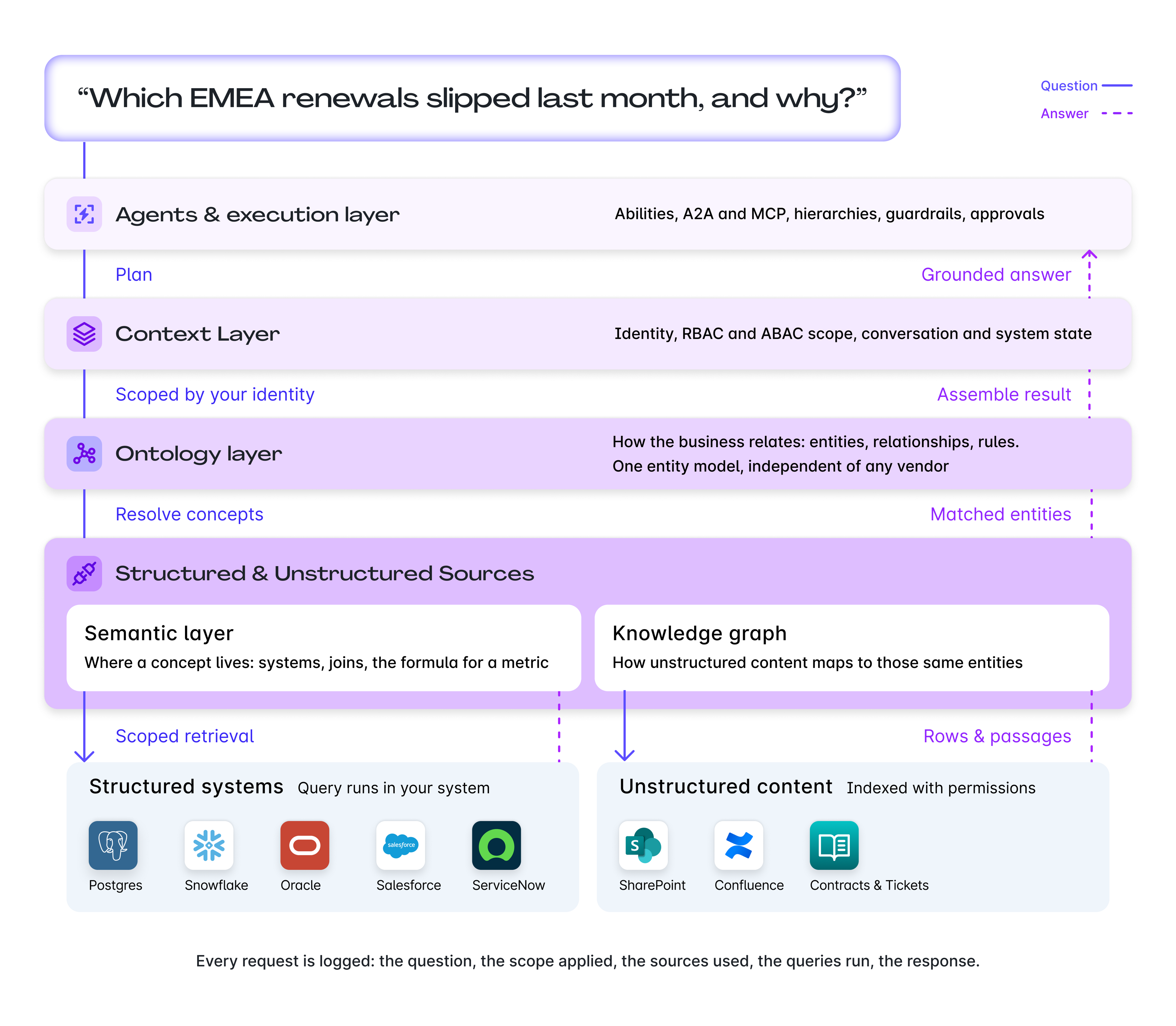
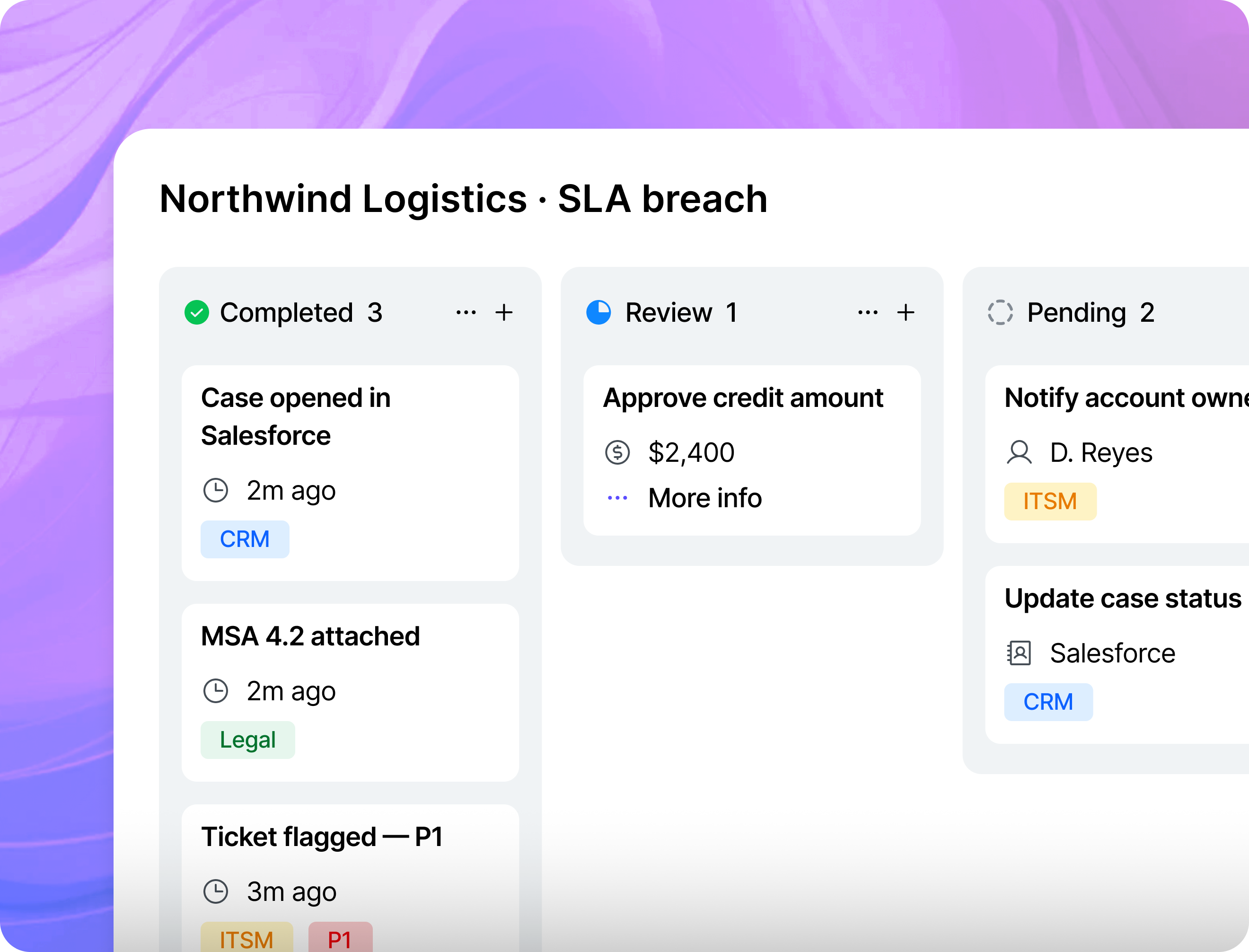
One request path. The blue descent is how a question becomes a query. The dashed teal return is what comes back with it — rows, passages, citations and the exact statements that ran. The outer loop is the same stack used to write: create the ticket, update the opportunity, with a human gate and an audit record.
| If you already have | Where it stops | What DataMind adds |
|---|---|---|
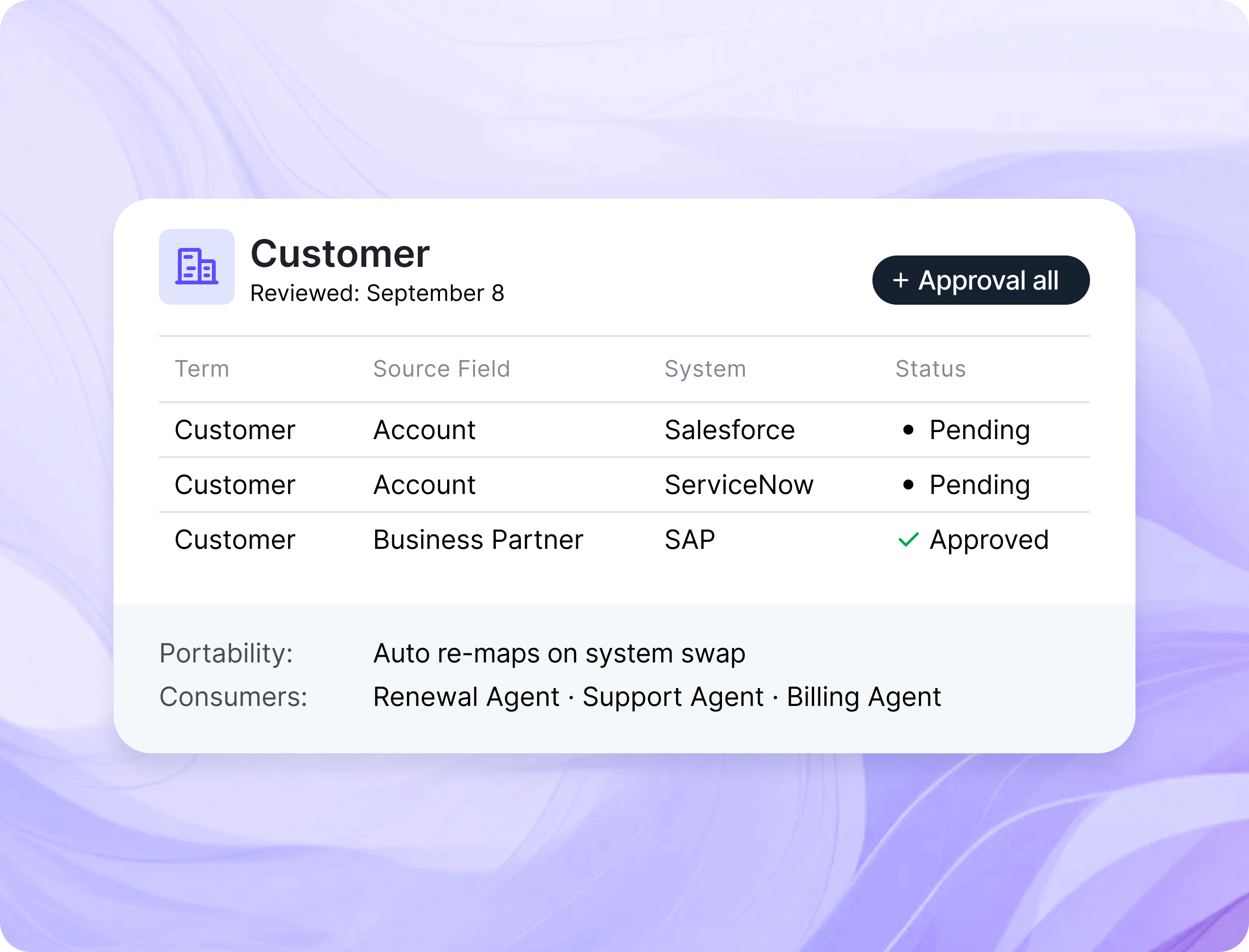
| A warehouse-native semantic layer | Meaning comes from that platform’s own metadata, and ends at its storage boundary | Business objects inferred across CRM, ITSM, ERP, support and documents — portable off any one platform |
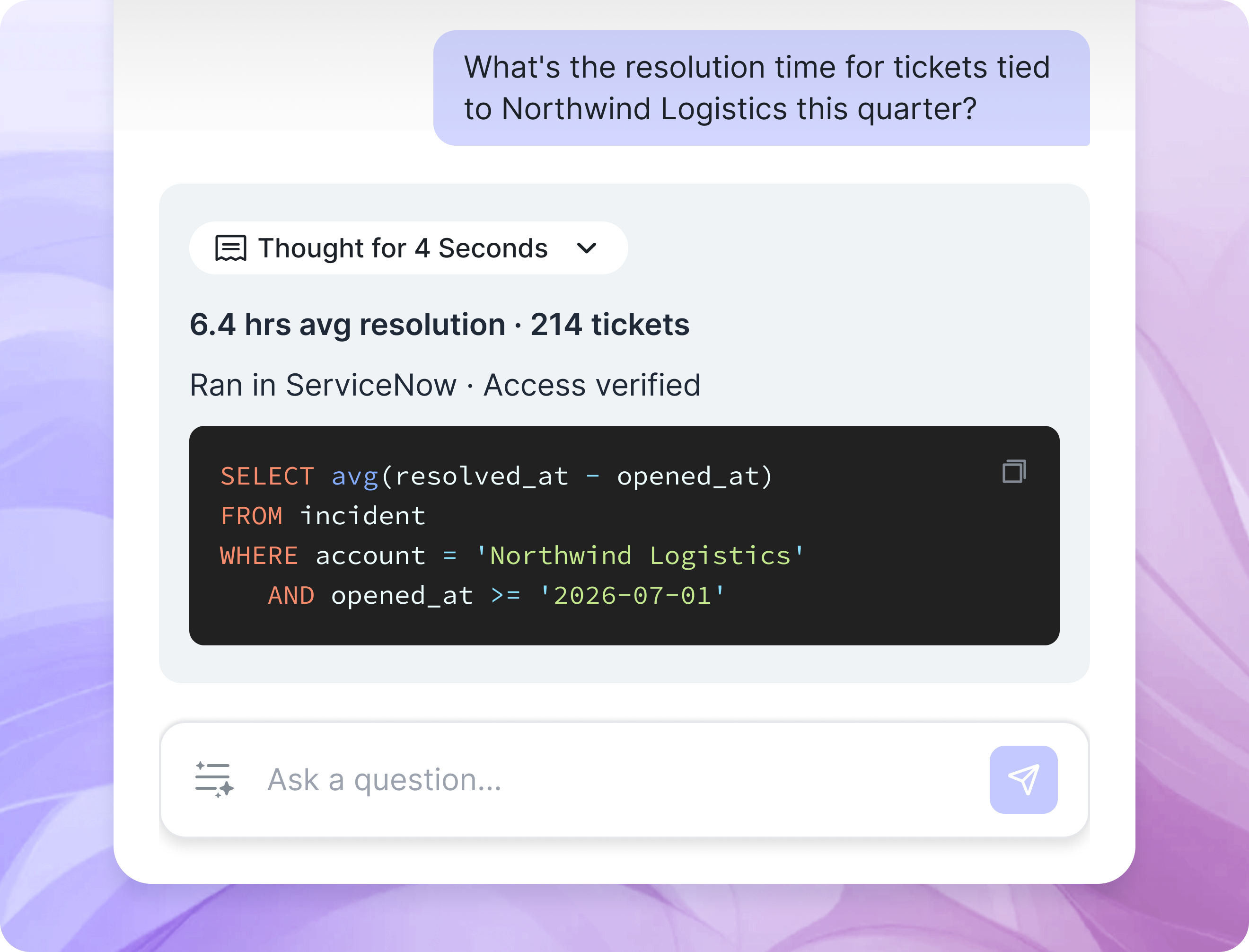
| Document RAG or vector search | Passages that resemble the question. No entities, no joins, no numbers | Entity-resolved retrieval that writes and runs a real query when the answer is a number |
| An agent framework | Orchestration. Meaning, permission and audit are left as an exercise | Semantics, query-time authorization and a full audit trail as platform primitives |
| A BI semantic layer | Modeled for dashboards and analysts. Read-only by construction | Built for agents, including governed write-back into the systems of record |
Proven Business Impact
28X
ROI on Revenue Operations
$3.3M in measured savings for a public communications company — paid for itself in under two weeks
$1.2M
Annual Support Savings
A global connectivity provider cut incident resolution times by 80% across ~36K annual tickets
4 Wks
From Pilot to Scale
Compared against a 6–12 month industry average for a conventional enterprise build.

Governed by Construction
SOC 2 Type II and ISO 27001 certified, end-to-end audit logging, secure regionalized storage



What changes on your side of the table

One governed agent layer, no migration project
AI programs that clear architecture and security review the first time — and a portfolio of agents governed as one system, not eleven pilots.
Agents run over the systems you already operate. Nothing is copied into a second estate, so there’s no new sprawl to secure and no new residency question to answer. Access is enforced at query time against your identity provider, every executed statement is retained, and the whole platform can sit in your cloud or on your own hardware.